Comparison
Tempest vs Termius: the honest comparison
Both are cross-platform SSH clients with encrypted sync, mobile apps, and team plans — which is exactly why the differences that remain are worth understanding before you commit your host list to either.
Independently written; Termius details from their public documentation, mid-2026.
Tempest vs Termius
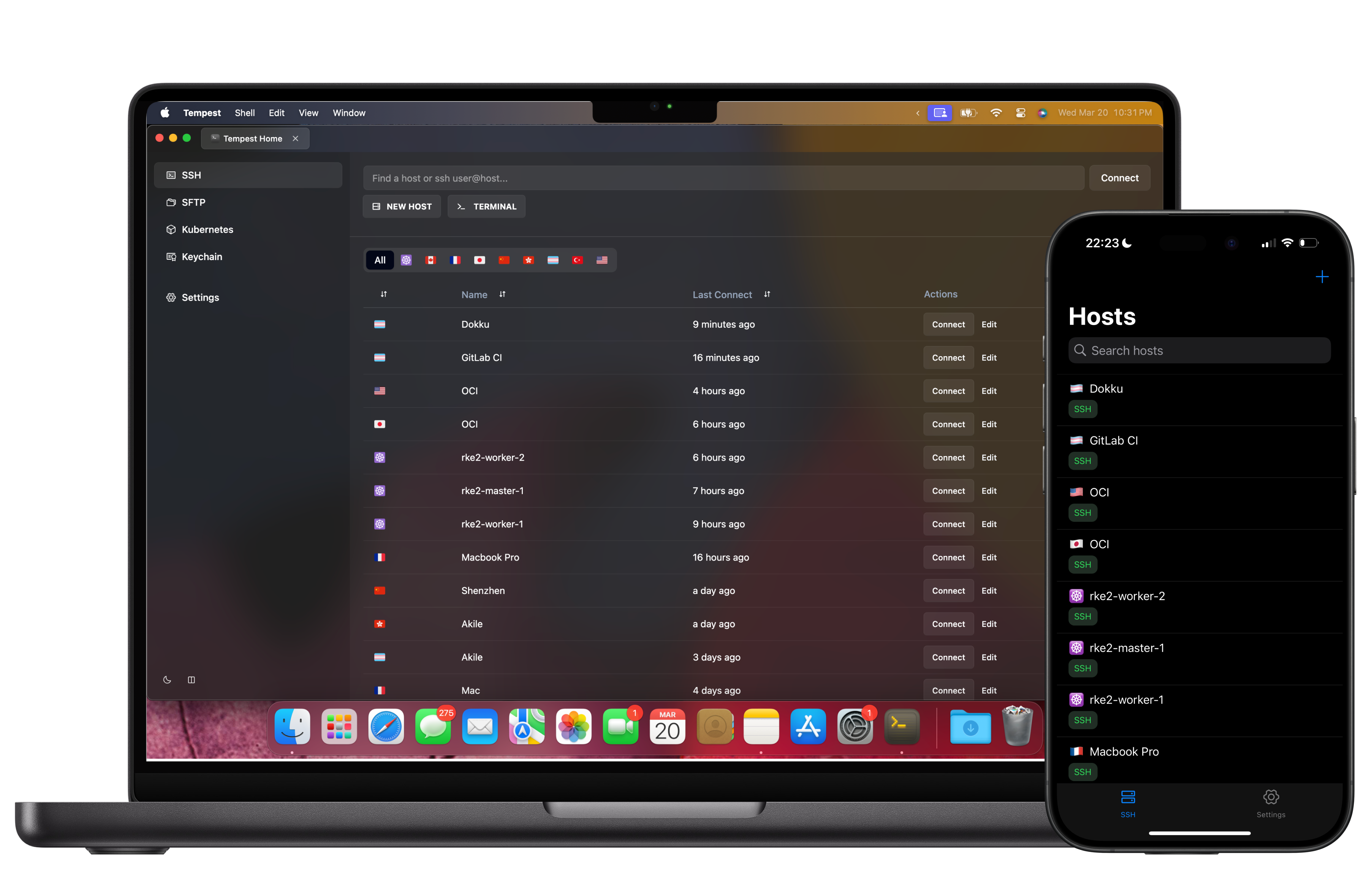
The short version: Termius is a polished SSH-first client. Tempest is a remote-infrastructure workspace that happens to start at SSH.
| Tempest | Termius | |
|---|---|---|
| Platforms | Windows, macOS, Linux, Android, iOS, Web | Windows, macOS, Linux, Android, iOS |
| SSH, Mosh, SFTP | Yes | Yes |
| Telnet | Yes | Yes |
| RDP / VNC remote desktops | Yes — in the same workspace | No |
| Kubernetes | Cluster profiles, pod shells, multi-cluster | No |
| Serial / RCON | Yes | No |
| S3 / WebDAV / FTP storage | Yes | No |
| End-to-end encrypted sync | Yes, zero-knowledge | Yes |
| Self-hosted backend | Docker & Kubernetes | No — cloud only |
| Web (browser) client | Yes — self-hosted & Enterprise | No |
| AI | Agent: diagnoses and runs multi-step fixes with approval | AI autocomplete / suggestions |
| Session recordings | Team plans | Team plans |
| Free plan | SSH, Mosh, SFTP, FTP, S3, WebDAV; 1 synced device | Basic SSH/SFTP, limited sync |
| Lifetime license | Yes | No — subscription only |
Termius capabilities based on publicly documented plans as of mid-2026; check termius.com for current details. Found something outdated? Tell us and we'll fix it.
Where Tempest wins
When your infrastructure is more than SSH
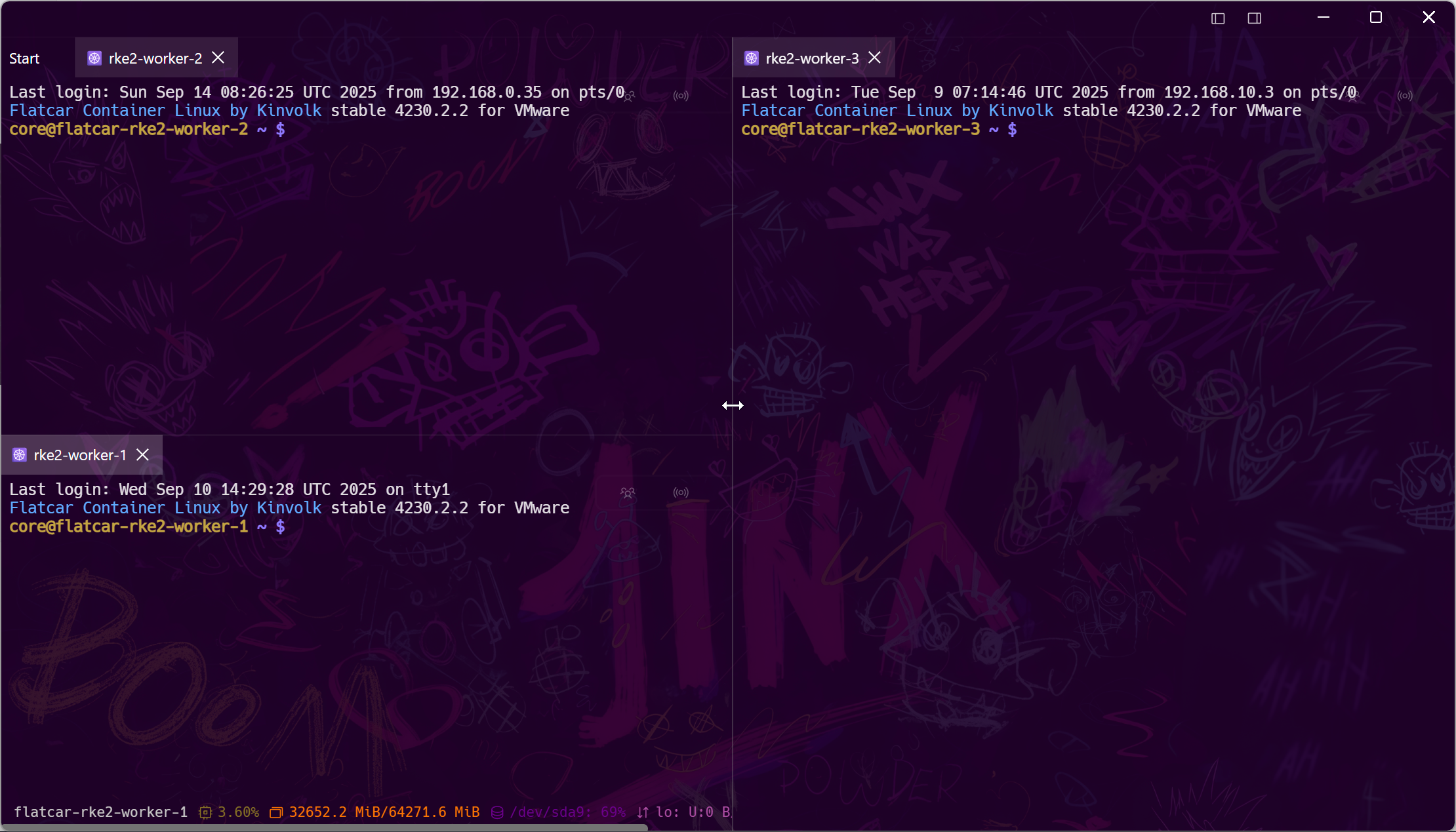
If your week includes a Windows Server console, a Kubernetes rollout, a switch on a console cable, or an S3 bucket of backups, Tempest keeps all of it in the app Termius only starts.
Where Termius holds up
Credit where due
Termius has a longer track record, a large snippet ecosystem, and years of mobile polish. If your work is strictly SSH-shaped and their subscription pricing fits, it remains a solid tool — this page exists for the people who've hit its edges.
Migration
Switching takes an afternoon, once
Import your OpenSSH keys, recreate hosts (or start from your ssh config), and the encrypted sync takes it from there. The free plan is enough to run the evaluation end to end.
Frequently asked questions
- Is Tempest cheaper than Termius?
- Plans differ in shape: both have free tiers and pro subscriptions, but Tempest also sells a one-time lifetime license and includes far more protocols at the Pro tier. For current numbers, see the pricing page. Tempest pricing
- Can Tempest import Termius hosts directly?
- There's no one-click importer today. Keys import directly; hosts are quick to recreate and then sync everywhere. Most migrations finish inside an afternoon.
- Do both encrypt my data end to end?
- Both vendors document end-to-end encryption for synced credentials. Tempest additionally publishes how the zero-knowledge scheme works and offers self-hosting if you'd rather not trust any vendor cloud. How Tempest E2EE works
- Which is better for teams?
- Both offer team credential sharing and recordings. Tempest adds SSH-CA-based host access, relay-brokered connections where credentials never reach the client, self-hosting, and a browser edition for zero-install onboarding.